Choose a reference with a clear direction
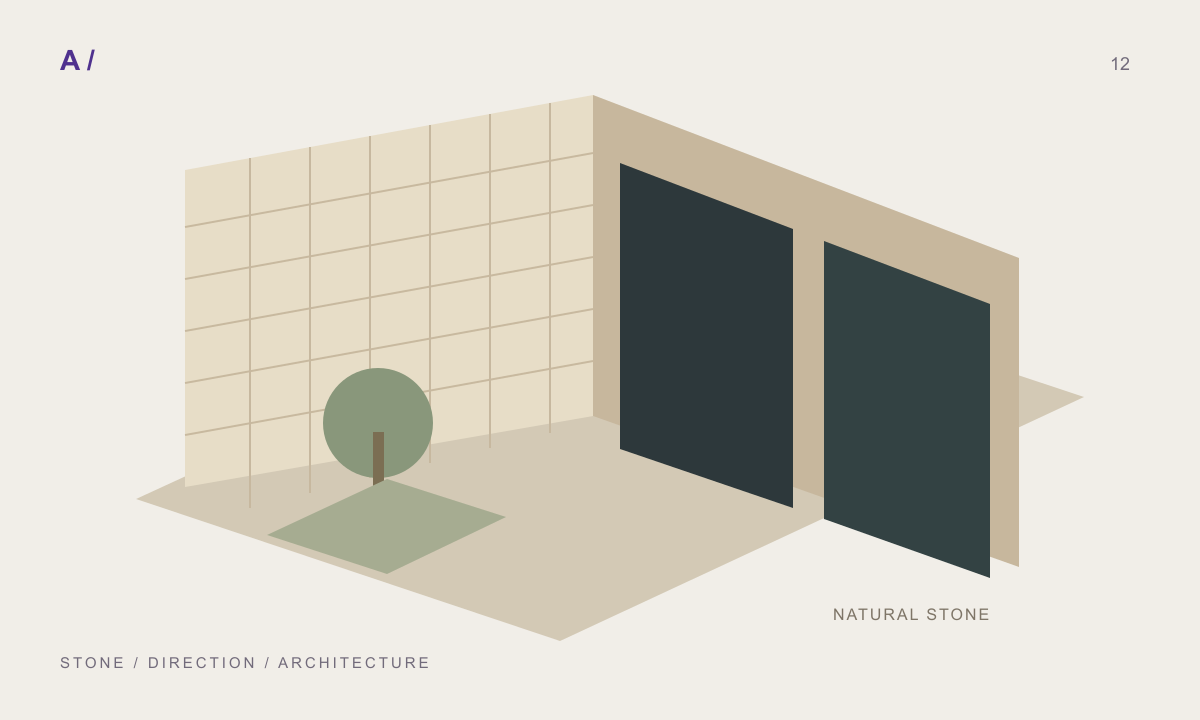
Travertine references can show long directional bands or a more cloud-like structure. Decide whether that visual direction should run along the facade, up a wall or across the floor. Keep a small orientation sketch beside the material schedule. Rotating a sample by ninety degrees can change the composition more than a subtle colour adjustment, so resolve orientation before refining tone.
Treat the format as a project decision
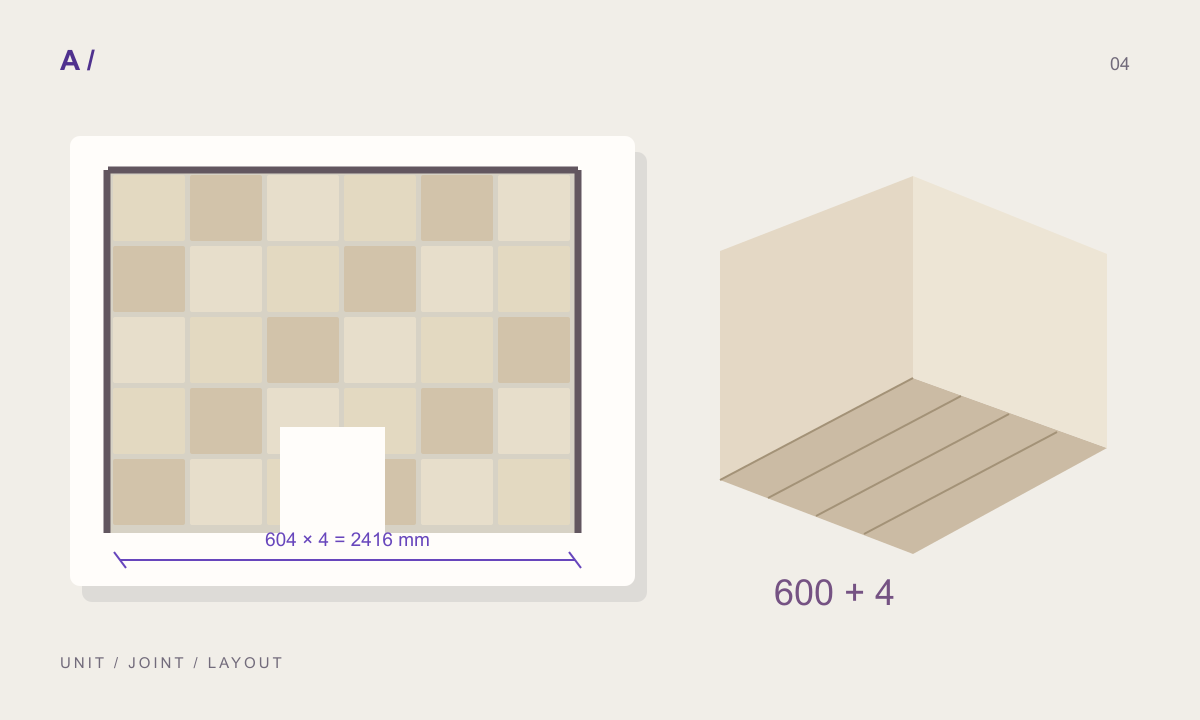
A 600 × 1200 mm format is a useful starting example, not a claim about every supplier. Enter the intended panel dimensions and joint width, then compare the resulting repeat with an elevation or floor plan. Source scan dimensions describe the photographed area; they do not automatically define a fabricated slab size. Confirm actual available formats and tolerances with the supplier before construction documentation.
Use restrained variation
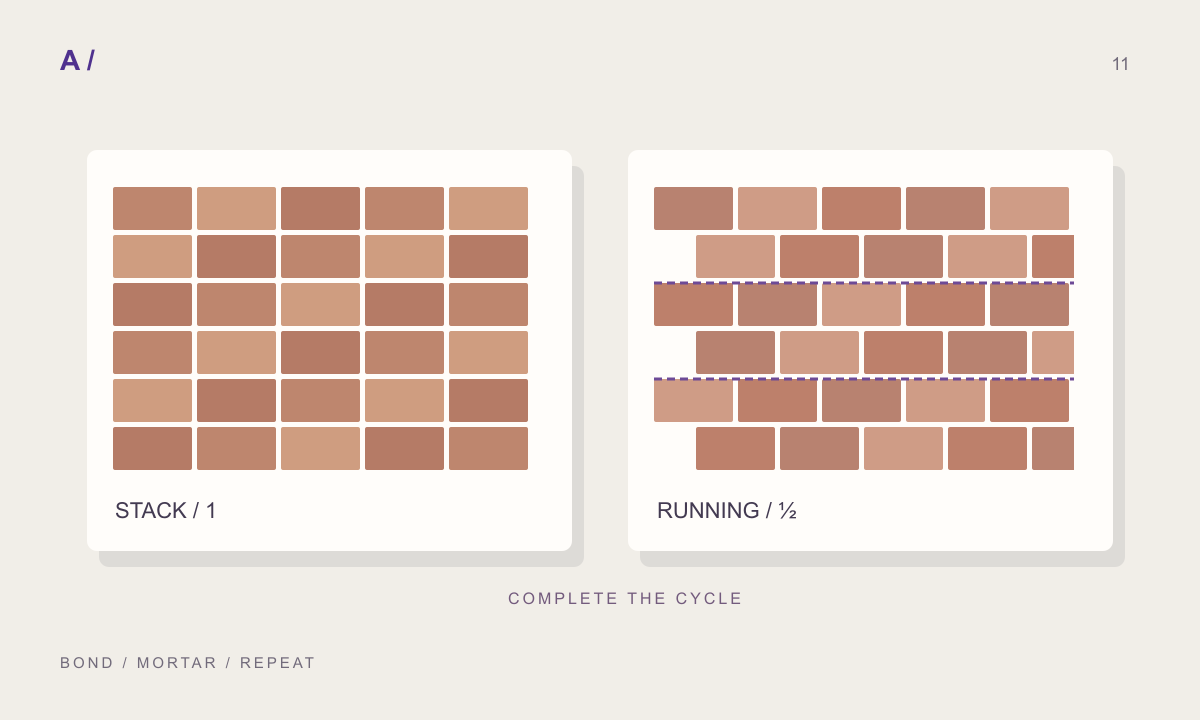
Begin with a consistent orientation and low tone variation. Large random rotations can interrupt directional grain at every joint; excessive colour variation can make a carefully selected stone look like a mixed batch. Introduce variation only after checking a wall-sized repeat. Review under neutral lighting as well as the project lighting so illumination does not hide abrupt colour changes.
Do not infer pore depth from colour alone
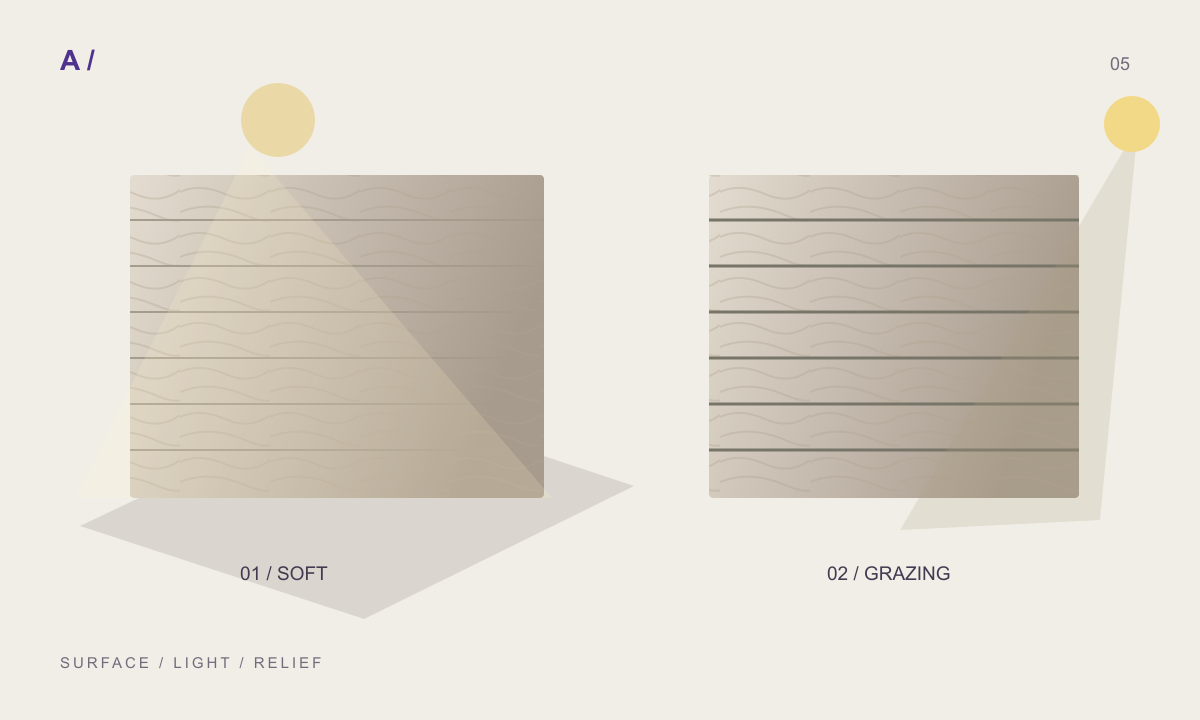
Dark pixels may describe pores, staining or illumination. A relief map derived from brightness can interpret these as the same thing. Start with restrained relief and inspect the surface from an oblique camera angle. Compare against a reliable reference when pore depth matters. A colour photograph cannot establish calibrated displacement, slip resistance, porosity or a product performance rating.
Keep the complete material decision
Save the source identifier, intended dimensions, finish choice, orientation and joint settings with the recipe. Check at least two repeat boundaries and one close detail before exporting. Keep any supplier technical sheet separately linked to the actual product; a similar-looking library texture is a visual reference. In MATERIALHAUS, choose a stone surface, adjust its layout and inspect the repeat before generating the final package.
Prepared by MATERIALHAUS with AI assistance. Worked dimensions are illustrative; verify construction details and technical product information for your own project.