Separate the three measurements
In a tile layout, the product width, the joint between units and the complete repeating area are different measurements. A product dimension describes one piece; the pitch describes the distance to the next equivalent position. One system may include the joint within the nominal module while another adds it to the unit size. Establish that definition before entering values.
The numbers here illustrate visual and drawing coordination. They do not specify site installation joints, movement joints, cutting allowances or product tolerances. Those decisions require the project detail and manufacturer information. Keep the illustrative layout separate from the construction specification.
Calculate a simple straight layout
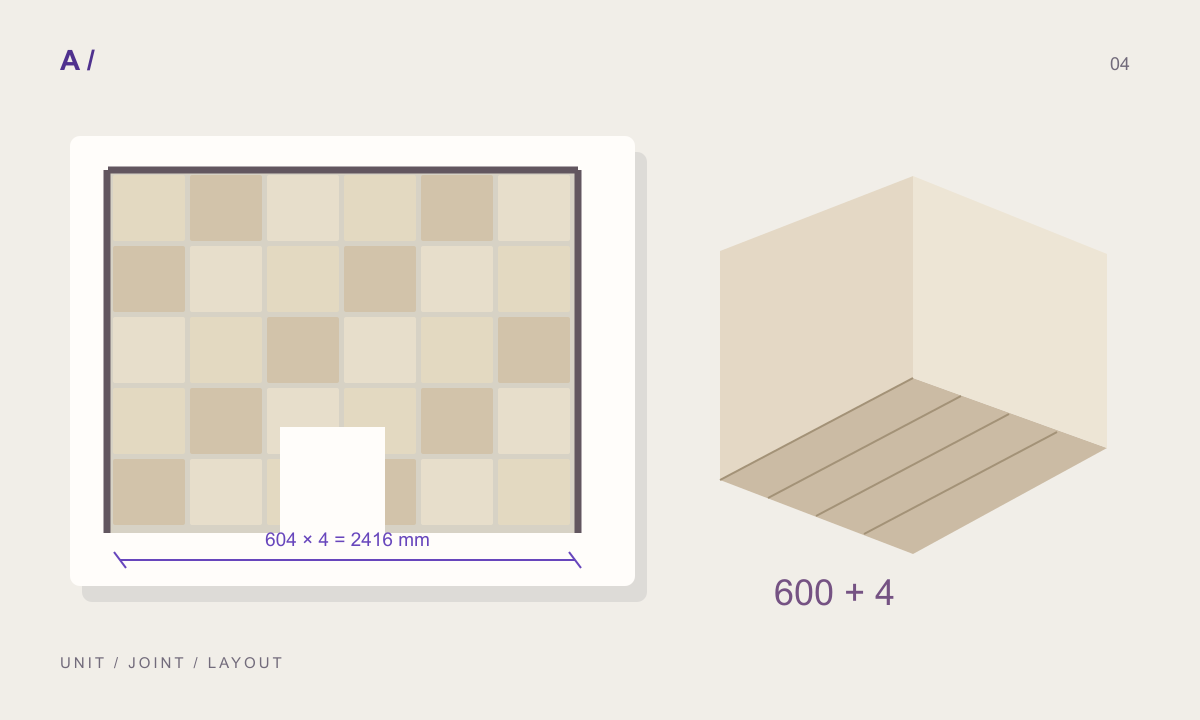
With a 600 mm tile and a 4 mm joint added to its width, the pitch is 604 mm. Four complete periods cover 2416 mm. However, four physical tiles with only their three internal joints span 4 × 600 + 3 × 4 = 2412 mm.
These answers describe different boundaries. The first is a periodic repeat; the second is a finite row of pieces. Perimeter joints are a further decision. Rather than stretching a texture to fit a room width, state which boundary each calculation represents. This small distinction prevents many apparent conflicts between a material preview and a measured drawing.
Complete the offset cycle
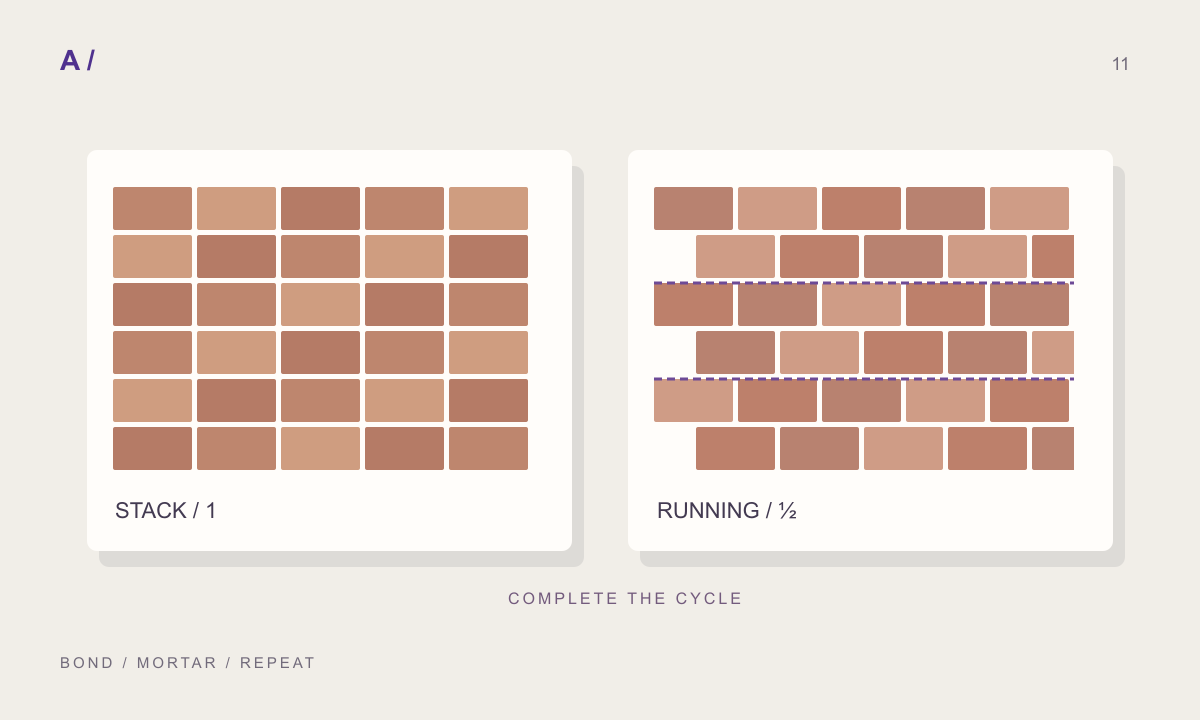
A straight layout returns to the same alignment on every row. A half-offset example completes its alignment in two rows; a third-offset example needs three. If the repeat image ends before the cycle is complete, the top and bottom boundary can introduce an unexpected shift.
After changing the pattern in MATERIALHAUS, inspect the complete repeating area rather than only its thumbnail. Row count or coverage may have changed. Do not automatically carry the previous pattern’s dimensions into the new package. Checking the new repeat avoids mixing two outputs that resemble each other but represent different areas.
Evaluate orientation within the room
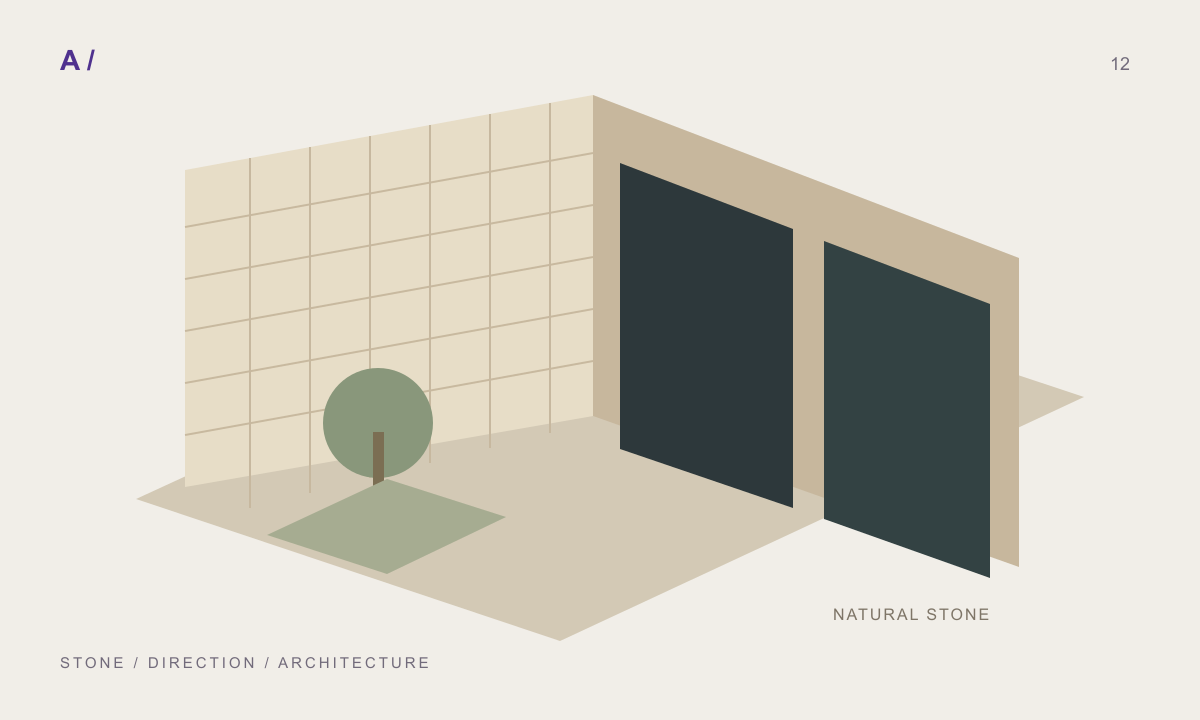
A long rectangular tile creates a different rhythm along a corridor than across it. A simple plan with door openings and the principal view direction can be enough to compare the alternatives. Show the same material in both directions and inspect the pieces near thresholds and wall edges.
A repeating texture is not a cutting or installation plan. A continuous visual pattern does not resolve the setting-out origin or the edge pieces required on site. If one document includes both visual direction and installation information, distinguish the status of each. This helps prevent a preliminary render from being interpreted as a completed setting-out instruction.
Treat joints as more than coloured lines
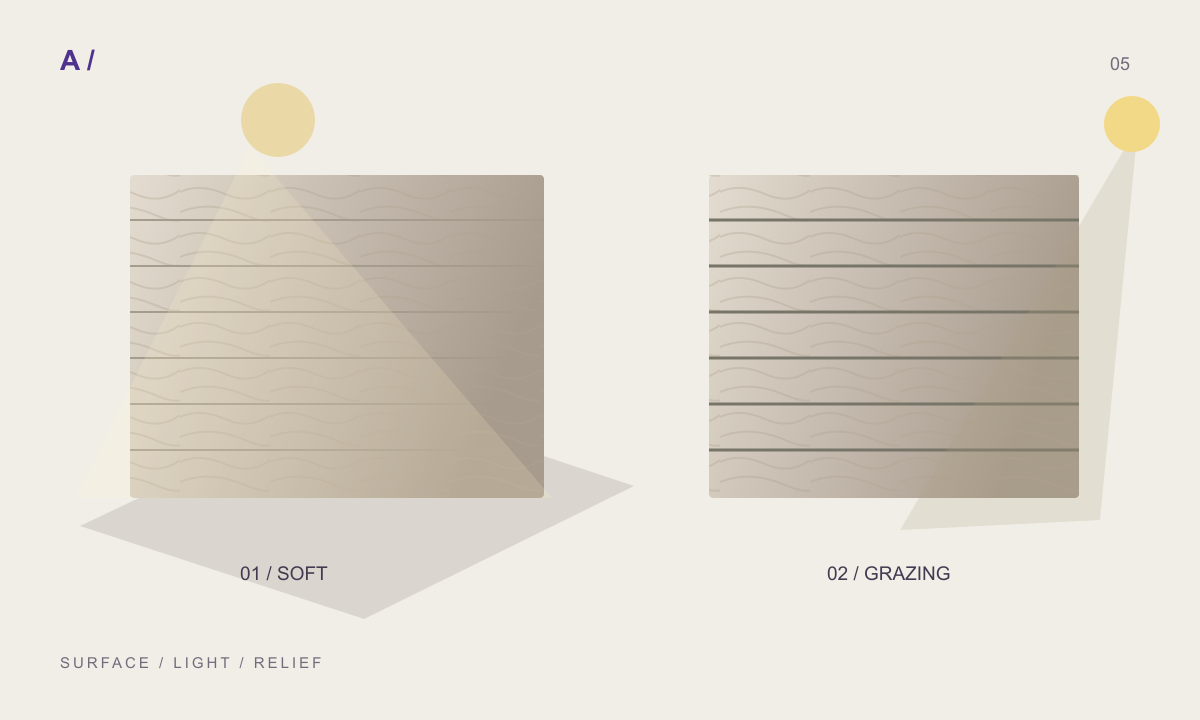
Joint width affects repeat coverage and the readability of a small-scale drawing. A thin joint visible in a close render can become narrower than one screen pixel at a distance. Disappearance is therefore not automatically a geometry error: examine preview resolution and camera distance as well.
A hatch can show a joint centreline or use two boundaries to express its width. Choose the representation for the drawing’s purpose. Changing the representation should not silently alter the physical joint dimension. Keeping the same dimensions while controlling graphical display separately produces a more consistent handoff between rendering and drawing.
Keep texture and drawing in one revision
Save the unit dimensions, joints and layout before preparing the texture maps and hatch files. After a change, create a consistent package rather than combining an older PAT with a newer colour image. Name the package so the material version is visible to the next person.
For the final check, choose an area of known dimensions and count horizontal and vertical repeats separately. Open the pattern in the destination drawing application and review orientation and scale. Generating a Revit PAT is not evidence of a validated Revit import. Record the application version, package version and observed result together.
Before you hand off
- Unit size, joint and full repeat are stated separately.
- Finite-row dimensions are distinct from periodic coverage.
- The offset cycle is complete.
- Room direction and layout origin were reviewed.
- Texture and hatch files belong to the same revision.
Frequently asked questions
Why do four 600 mm tiles not always span 2400 mm?
The treatment of joints changes the result. Four pieces, their internal joints and a complete periodic repeat describe different boundaries.
Does the repeat calculation provide a quantity takeoff?
No. Cuts, waste, perimeter conditions and movement joints require a separate installation assessment.
Prepared by MATERIALHAUS with AI assistance. Worked dimensions are illustrative; verify construction details and technical product information for your own project.